


Many international buyers focus on location, design, and price when evaluating a condominium in Chile. Yet one of the most important documents affecting your investment is often overlooked: the building’s internal regulations. Every condominium operates under a set of binding rules known as co-ownership regulations—reglamento de copropiedad—in Chile, imposed by the Homeowners Association (HOA). These…
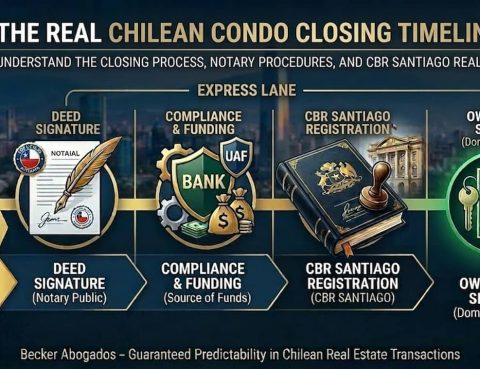
Luxury real estate transactions in Chile follow a structured legal process that is often unfamiliar to foreign investors. While the purchase agreement may be signed quickly, the actual transfer of ownership depends on several administrative stages that must take place before the deal is legally completed. These stages—ranging from signing the deed before a real…

Foreign investors often assume that once the purchase price is agreed and the money is ready, completing a real estate transaction in Chile should be straightforward. In reality, many luxury property deals slow down due to banking verification procedures that occur before the funds are accepted or transferred. In Chile, financial institutions must carefully review…

Renovated apartments are highly attractive to buyers. Open-concept kitchens, expanded living spaces, integrated terraces, and custom interior layouts can significantly increase the value and appeal of a luxury condo. However, in Chile, a renovation that looks modern and stylish can sometimes hide a serious legal problem. One of the most important elements to verify before…

Buying property in Chile often begins with a step that many foreign investors underestimate: the promissory contract—known locally as “promesa de compraventa”. This agreement is typically signed before the final purchase deed and usually involves paying a deposit to secure the property. For international buyers, this stage can be one of the most financially vulnerable…
