
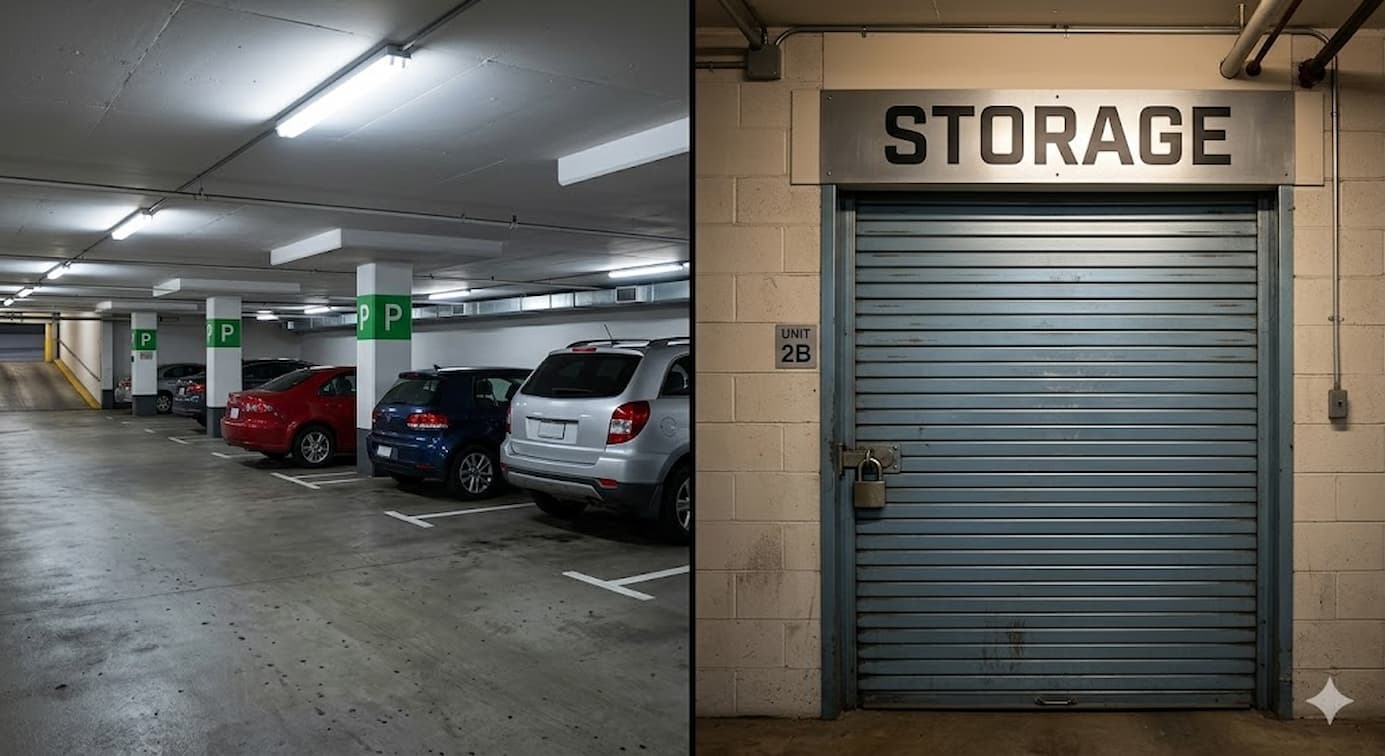
Luxury apartments in Santiago are often marketed with attractive “extras”: private parking spaces, storage units, or additional common-area privileges. These features can significantly increase the value and functionality of a property, especially in dense urban areas where parking and storage are highly sought after.
However, what many foreign investors do not realize is that not every parking space or storage unit shown during a property visit is automatically included in the legal purchase. In Chile, these assets must be formally registered and clearly identified in the property records.
If a parking space or storage (estacionamiento o bodega) unit is not properly listed in the property registry, the buyer may discover after closing that the asset was never legally part of the purchase.
For this reason, verifying the real estate and the details of the registration in the Chilean registry of parking spaces and storage units is an essential step in any real estate due diligence process.
Just because you saw it doesn’t mean it’s in the deed. Ensure every “extra” is properly registered
When purchasing a condominium in Chile, every element included in the sale must be clearly identified in the purchase deed and registry records.
This includes not only the apartment itself but also any additional units such as parking spaces or storage rooms. Each of these assets must appear in the legal documentation and in the registry maintained by the Conservador de Bienes Raíces (CBR).
If they are not properly registered, the buyer may have no legal claim to them—even if they were presented as part of the sale. This is why a detailed property deed check Santiago investors perform before closing is critical to confirming exactly what is being transferred.
How parking spaces are registered
In Chilean condominium developments, parking spaces can be registered in different ways.
- Some are recorded as independent property units, meaning they have their own registry entry and ownership record.
- Others are registered as exclusive-use rights attached to a specific apartment within the condominium’s governing documents.
In either case, the buyer must verify that the parking space is properly identified and legally linked to the property being purchased. Without confirming the registration of the parking and storage facility in Chile, investors run the risk of paying for a space that does not legally belong to them.
Storage units: another frequently misunderstood asset
Storage rooms—known as bodegas—are another common feature in modern condominium developments.
Like parking spaces, storage units may either be individually registered or assigned as exclusive-use areas within the building. If the documentation does not clearly reflect the existence and ownership of the storage unit, the buyer may have difficulty proving their rights over that space in the future.
This is why investors should always verify property assets beyond the main apartment unit itself.
Why these issues appear in real estate transactions
These discrepancies often arise because the marketing materials used by brokers or developers focus on the physical features of the property rather than its legal structure. During property visits, buyers may be shown a specific parking spot or storage unit and assume that it is automatically included in the sale.
However, the legal ownership of these assets depends entirely on what appears in the purchase deed and registry records. A thorough property deed check Santiago process ensures that the physical reality of the property matches its legal description.
The cost of not verifying property extras
Failing to verify the legal registration of parking spaces and storage units can lead to several complications.
For example, the buyer may discover that:
- The parking space belongs to another apartment.
- The storage unit was never legally registered.
- The building administrator assigns the space temporarily rather than permanently.
- The unit is part of the condominium’s common areas.
Resolving these disputes after closing can be difficult and time-consuming.
A thorough verification protects the full value of your investment
Parking spaces and storage units can represent a significant portion of a property’s market value—particularly in high-demand areas of Santiago. Confirming that these assets are legally registered and properly linked to the apartment protects the full value of the investment and prevents disputes after the purchase.
Buyers who take the time to verify property assets before signing the final deed avoid misunderstandings and ensure that the transaction accurately reflects the property being sold.
With careful legal verification, the buyer can move forward knowing that every part of the property—from the apartment to the parking space—is legally secured.
Why contact Becker Abogados?
Foreign investors frequently rely on Becker Abogados to verify the legal structure of condominium properties before completing a purchase. Our legal team reviews the registry documentation to confirm and ensure that all assets included in the sale are correctly registered in the deed and in the CBR entry.
Through a detailed property deed check Santiago, Becker Abogados helps buyers confirm the legal existence and ownership of parking spaces, storage units, and other property components. This verification ensures that investors receive exactly what they believe they are purchasing.
Don’t lose your parking spot. Verify your property’s legal individualization now.



Recent Comments