
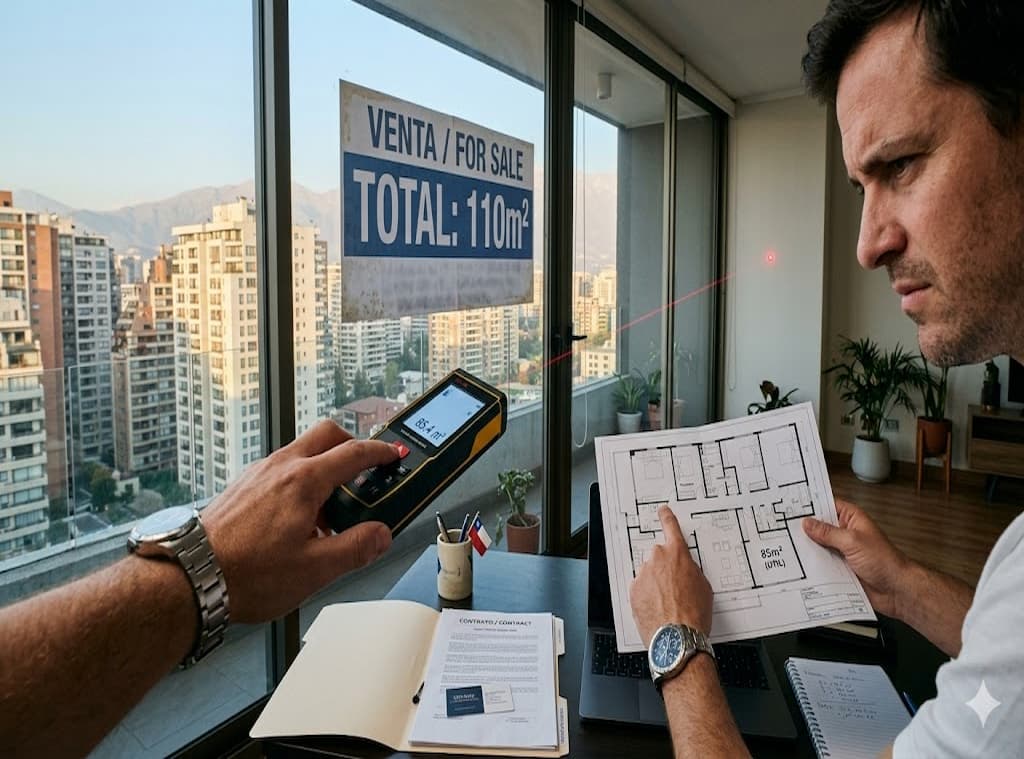
Real estate listings often highlight one of the most important aspects for buyers: the size of the apartment. For investors comparing various opportunities in Santiago, square footage can significantly influence both the price and expected rental income.
However, in Chile, it’s not uncommon for the size presented in marketing materials to differ from the legally recognized actual square footage. Nevertheless, when the difference in square footage is significant, it becomes a problem.
Furthermore, it causes considerable frustration for the buyer who discovers—often after signing the contract—that the apartment is smaller than advertised.
For investors paying premium prices per square meter, understanding how square footage dispute Chile situations are handled is an essential part of protecting the value of the investment.
Paying for 100sqm but getting 85sqm? Learn your contractual remedies for “inflated” metraje
In Chilean real estate transactions, the surface area of a property—known as metraje—should be clearly reflected in the legal documentation of the property. However, it should be clarified that not all measurements refer to the same type of surface area.
Real estate listings may refer to:
- Total constructed area.
- Usable interior space.
- Terrace or balcony area.
- Common areas attributed to the unit.
If these distinctions are not clearly explained, a buyer may assume that the apartment has more usable space than it actually does. This misunderstanding is one of the most common sources of square footage dispute Chile cases in the real estate market.
Why surface area differences occur
Several factors can lead to discrepancies between the advertised size of a property and its legally recognized dimensions. For example:
- In some cases, the seller may rely on outdated architectural plans that no longer match the current configuration of the apartment.
- In others, real estate listings combine different types of space—such as terraces and interior living areas—into a single figure that appears larger than the usable interior area.
- Occasionally, the discrepancy results from simple marketing practices intended to make a property appear more attractive to buyers.
Regardless of the cause, these discrepancies can create a conflict in the reading of the apartment’s square footage (metraje del departamento) in Chile. Which can lead to a major problem if the buyer believes they are paying for more space than they are receiving.
How the legal system evaluates these disputes
Chilean contract law generally considers the property description in the purchase deed to be the definitive reference for the transaction. If the deed accurately describes the property and its registered dimensions, resolving disputes about marketing descriptions can be more complicated.
However, if the buyer can prove that the real estate misrepresentation or that the property was misrepresented during the negotiation process, legal recourse may still be available.
These may include:
- Negotiating a price adjustment.
- Requesting compensation for the discrepancy.
- Challenging the transaction based on misleading information.
Each case depends on the specific contractual language used in the purchase agreement.
Why accurate measurement clauses matter
Because of these potential disputes, experienced investors often ensure that the purchase contract contains clear metraje clauses. These provisions specify how the surface area of the property is calculated and confirm that the buyer is purchasing the property based on accurate measurements.
By addressing the issue directly in the contract, both parties reduce the risk of a future square footage dispute Chile situation. In many cases, these clauses can also define the remedies available if the difference between the advertised and actual size exceeds a certain threshold.
Why professional due diligence is important
Foreign investors often rely heavily on listing information and property tours when evaluating apartments. However, verifying the legal dimensions of the property requires reviewing official documentation such as registry records, architectural plans, and municipal permits.
This step is especially important when the price per square meter is a key factor in the investment decision. During the due diligence stage, many buyers rely on legal professionals to confirm that the property description in the deed accurately reflects the apartment being purchased.
At this stage of the process, Becker Abogados frequently assists foreign investors, reviewing documentation and identifying potential discrepancies in the square footage of the apartment in Chile, with the aim of detecting any problems before the purchase is finalized.
Preventing disputes before they happen
The most effective way to avoid square footage disputes is to clarify the issue before signing the final purchase deed. This includes confirming the official surface area of the apartment and ensuring that the purchase contract reflects the correct measurements.
Working with experienced legal advisors can also help investors identify inconsistencies between marketing materials and official documentation. By addressing these questions early, buyers can ensure that the price they pay accurately reflects the property they are acquiring.
Throughout this process, Becker Abogados supports international investors by reviewing property documentation, confirming the registered dimensions, and drafting contractual protections that reduce the risk of real estate misrepresentation.
For foreign buyers entering the Chilean market, this legal verification can protect both the value of the investment and the long-term confidence in the transaction.
Get what you pay for. Protect your investment with accurate metraje clauses.



Recent Comments