
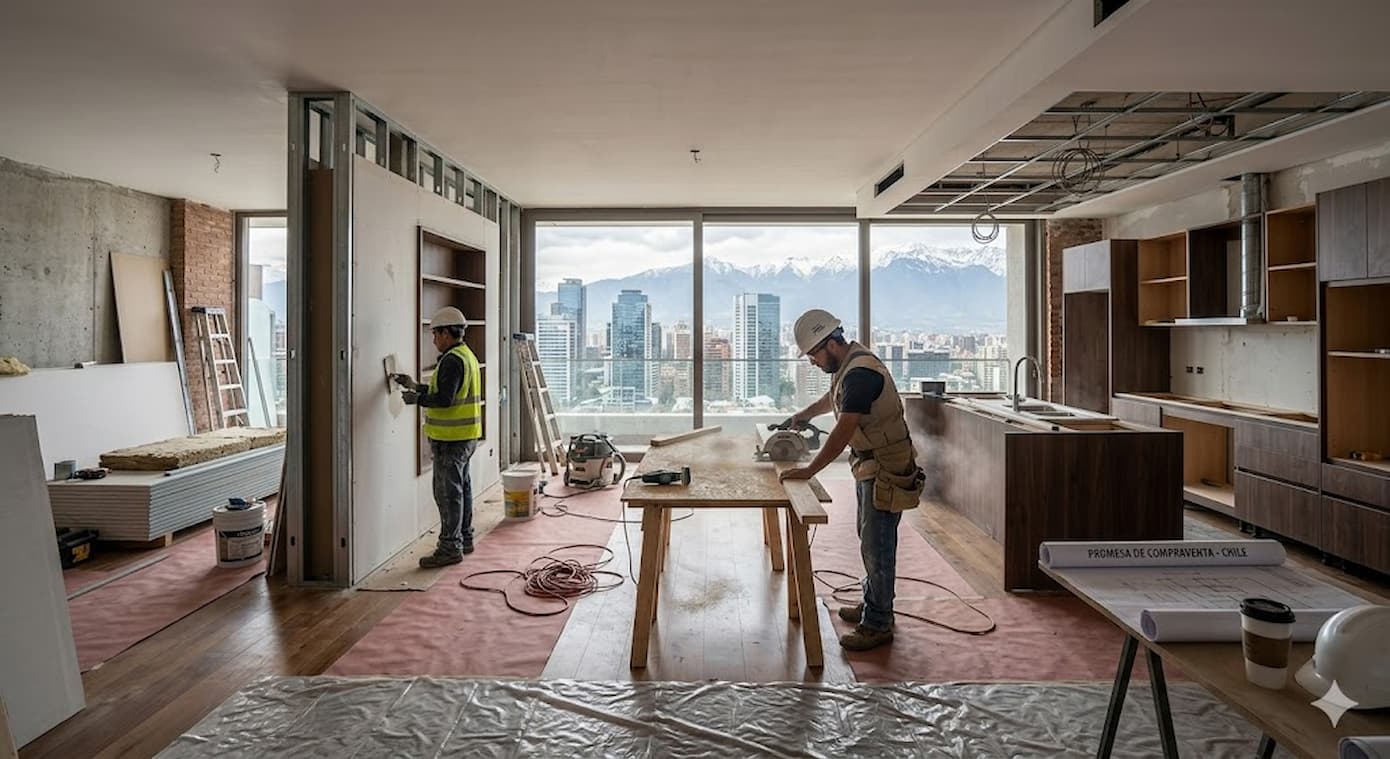
Renovated apartments are highly attractive to buyers. Open-concept kitchens, expanded living spaces, integrated terraces, and custom interior layouts can significantly increase the value and appeal of a luxury condo.
However, in Chile, a renovation that looks modern and stylish can sometimes hide a serious legal problem. One of the most important elements to verify before purchasing a renovated property is a specific municipal certificate: the recepción final Chile apartment. This document confirms that the construction or renovation complies with approved plans and regulations.
Many foreign investors purchase renovated apartments without realizing that the modifications may not comply with municipal regulations. When this happens, the property may technically be out of compliance with the building permit and municipal records, which can create legal and financial complications.
Without proper verification, a buyer could inherit a property that looks perfect—but is legally problematic.
That beautiful open-concept kitchen might be a municipal violation. Check the “Recepción Final” status first.
“Recepción final Chile apartment” is an official document issued by the municipality confirming that a building—or a significant renovation—has been completed according to the approved architectural plans and construction permits.
This certificate is essential because it confirms that the property meets all municipal compliance Santiago standards, as well as broader national regulations and urban planning rules.
For many luxury apartments, especially those renovated over time, the current layout may not match the officially approved plans registered with the municipality.
Common examples include:
- Removing walls to create open spaces
- Expanding kitchens or living rooms
- Closing terraces or balconies
- Merging storage spaces into the apartment
- Modifying bathrooms or plumbing layouts
While these changes may improve the property’s aesthetics or functionality, they may also violate municipal regulations if they were not formally approved.
Why this issue matters for buyers
When renovations are carried out without proper permits, the property becomes legally irregular. This situation may not affect the owner’s daily use of the apartment, but it can create serious issues in several situations, for example:
- Reselling the property: future buyers—or their lawyers—may detect inconsistencies between the actual apartment layout and the municipal records.
- Financing or mortgage approval: banks sometimes review compliance documentation before approving financing.
- Municipal inspections: if the municipality identifies unauthorized modifications, the owner may face fines or be required to reverse the alterations.
These problems can often appear years after the renovation was completed, usually when the property is about to be sold.
The hidden risk in luxury renovations
High-end apartments are particularly susceptible to this issue because many renovations are carried out by previous owners to increase comfort or resale value.
In some cases, owners assume that minor modifications do not require permits. In others, renovations are done quickly before a sale without formal approval.
As a result, a buyer may acquire an apartment that appears perfectly renovated but does not comply with municipal building records.
For foreign investors unfamiliar with local regulations, identifying this risk without professional help can be extremely difficult.
What is “regularización” and when is it required?
If a property has unauthorized modifications, the owner may need to complete a process called “regularización de departamento” (regularization of department). This regularization involves submitting updated architectural documentation to the municipality and obtaining official approval for the modifications.
This process may include:
- Preparing architectural plans
- Hiring a licensed architect or engineer
- Filing documentation with the municipality
- Paying administrative fees and possible fines
In some cases, regularization is straightforward. In others, the municipality may require modifications to restore compliance with building regulations.
For buyers, discovering the need for regularization after the purchase can create unexpected costs and delays.
How to verify Municipal compliance before buying
The safest way to avoid this issue is to verify the property’s Recepción Final and municipal records before signing any purchase agreement.
This verification process typically involves:
- Reviewing the municipal building file
- Comparing approved architectural plans with the current layout
- Identifying unauthorized modifications
- Determining whether regularization is required
Taking these steps is essential and forms part of proper real estate due diligence. At Becker Abogados, we ensure that each of these points is thoroughly verified before acquiring a property in Santiago or other Chilean cities.
How Becker Abogados helps you avoid this trap
At Becker Abogados, we regularly assist foreign investors who want to ensure that a property is fully compliant before completing the purchase. Our legal team reviews municipal documentation and verifies whether the recepción final status matches the actual condition of the property.
Through our due diligence process, we help clients:
- Confirm municipal compliance Santiago requirements
- Detect unauthorized renovations
- Identify whether regularización departamento may be required
- Evaluate the legal and financial risks before signing the purchase deed
For international investors entering an unfamiliar legal environment, this verification can prevent costly surprises and ensure the property remains legally secure for resale in the future.
Working with Becker Abogados allows buyers to move forward with confidence, knowing that their investment complies with Chilean municipal regulations.
Avoid municipal fines and resale issues. Check your condo’s compliance today.



Recent Comments