
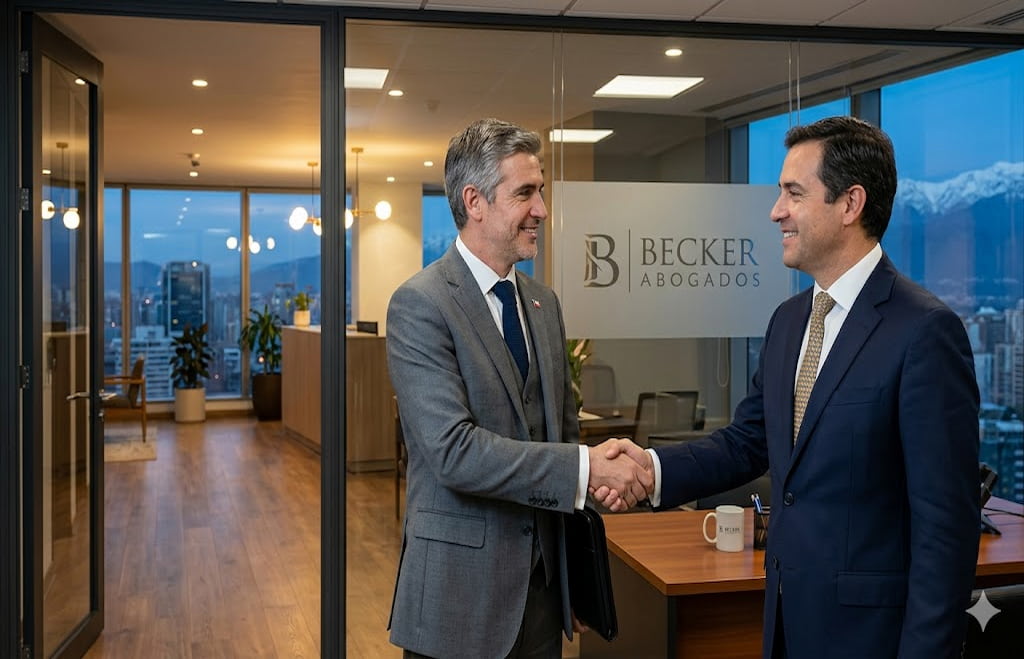
In Chilean real estate transactions, especially those involving foreign investors, it is common to encounter a “full-service” setup: the broker introduces the property, negotiates the terms, and then suggests a lawyer to “handle everything else.”
At first glance, this arrangement feels efficient. One point of contact, fewer moving parts, and a faster path to closing. But beneath that convenience lies a structural vulnerability that many buyers only recognize when it is too late: a conflict of interest broker lawyer in Chile scenario where the legal layer of the transaction is not fully independent.
For investors seeking independent legal advice Santiago, this is not a minor technicality—it is one of the most important decisions in the entire acquisition process. In practice, having truly independent counsel is a key layer of property fraud prevention in Chile’s real estate market.
If the broker is paying the lawyer, who are they really protecting? Avoid the ultimate conflict of interest
The issue is not about competence or professionalism. Many lawyers operating within broker networks are experienced and capable. The real issue is alignment.
When a lawyer is introduced and compensated within the broker’s ecosystem, the transaction itself becomes the shared objective. Closing the deal becomes the central outcome that aligns all participants.
That alignment creates a subtle but powerful shift: “legal advice may begin to support the transaction instead of challenging it”. In high-value real estate investments, that shift can expose the buyer to risks that were never fully explored.
When the transaction itself sets the tone, rather than the law
In a properly structured deal, the legal analysis should define the pace and structure of the transaction. However, in a broker-driven setup, the opposite often happens.
The deal creates momentum. Deadlines appear. The narrative becomes urgent. And legal review adapts to keep up with that momentum. Instead of asking, “Is this structure fully secure?”, the process leans toward “How do we make this work quickly?”
For foreign investors, this transition is rarely obvious—yet that is precisely where, as a buyer, you begin to lose control.
The illusion of simplicity in cross-border deals
One of the most dangerous aspects of this structure is how simple everything appears.
- Documents are presented as “standard”.
- Timelines are described as “normal”.
- Risks are framed as “minor”.
This simplicity is often interpreted as transparency. Although in reality, it can mean that complexity is being filtered out of the conversation.
Foreign buyers—especially those unfamiliar with Chilean legal procedures—are particularly vulnerable to this dynamic. Without independent verification, it becomes difficult to distinguish between:
- What is legally sound.
- What is commercially convenient.
- What is simply being assumed.
This is why many investors contact us at Becker Abogados—seeking to introduce a new, independent layer to re-examine the transaction free from commercial pressures.
Where information starts losing depth
In transactions affected by a conflict of interest broker lawyer in Chile, the issue is not usually misinformation—it is incomplete information. Important details may still be present, but they are often condensed, simplified or deprioritized.
For example:
- A restrictive clause may be mentioned but not fully explained.
- A title observation may be acknowledged but not explored.
- A regulatory issue may be noted but not analyzed in depth.
Over time, this creates a situation where the investor is making decisions based on a filtered version of reality—exactly the type of environment where property fraud prevention becomes weaker and risks go unnoticed.
The cost of not challenging the structure early
By the time most buyers begin to question the structure of the transaction, they are already emotionally and financially invested. They may have paid a deposit, signed a promissory contract, or started planning the use of the property. And at that stage, changing direction becomes more difficult.
This is why experienced investors focus on the structure of the deal before committing, not after. Working with independent counsel early allows the buyer to identify whether the transaction is:
- Properly structured
- Legally consistent
- Aligned with their investment objectives.
In our firm “Becker Abogados” we specialize in this early-stage intervention, helping investors regain control before the process becomes irreversible.
The dynamic changes when independent legal counsel is introduced
The moment independent legal counsel enters the transaction, the tone changes. The conversation shifts from execution to evaluation. Instead of moving forward automatically, the process begins to ask:
- What has not been verified yet?
- What assumptions are being made?
- What risks are being accepted implicitly?
This shift does not slow the transaction unnecessarily—it refines it, guarantees that the deal being closed is the deal the investor actually believes they are entering.
When not moving forward is the right outcome?
One of the clearest signs of independent legal advice is the willingness to stop. Not delay. Not adjust. Stop when necessary. This is something that rarely happens within a broker-led structure, where the incentive is always to continue.
However, for high-value investments, identifying when a deal should not proceed can be more valuable than completing the transaction.
At Becker Abogados we operate with this mindset, prioritizing the investor’s long-term protection over short-term execution.
Structural signals that should never be ignored
Foreign investors can protect themselves by identifying key structural indicators early in the process.
These include:
- The lawyer is introduced exclusively by the broker.
- There is no direct engagement agreement with the lawyer.
- Legal advice is delivered informally or without written analysis.
- Questions about risk are answered with urgency rather than clarity.
Individually, these signals may seem minor. Together, they indicate a structure where independence may be compromised. Recognizing these patterns early allows the investor to rebalance the transaction.
Why it is better to contact becker abogados before letting the deal move forward
Before signing any agreement, take a step back and examine the structure surrounding the transaction.
- Who is advising you?
- Who benefits from speed?
- Who benefits from scrutiny?
Many international investors involve Becker Abogados at this precise moment to obtain a fully independent legal perspective before committing.
This step often changes the negotiation dynamic, introduces necessary corrections, and ensures that the transaction reflects the investor’s actual interests—not just the momentum of the deal.
In high-value real estate acquisitions, that difference is not theoretical—it is decisive.
Prioritize your protection. Choose an independent, licensed lawyer for your investment.



Recent Comments